
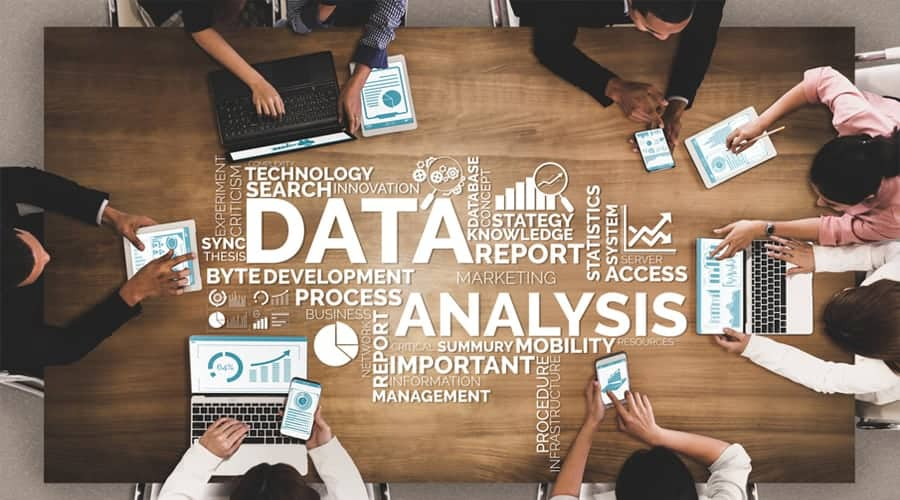
Data is now one of the most important assets a company can have in the rapidly evolving digital world of today. When making critical decisions, businesses no longer rely on intuition or guesswork. Rather, they employ data and analytics to identify patterns, forecast trends, comprehend consumer behavior, and enhance overall performance. Companies that use data effectively grow more quickly, make better decisions, and outperform their rivals. In today’s fast-moving digital world, data has become one of the most valuable resources a business can possess. Companies no longer rely on guesswork or intuition when making important decisions. Instead, they use data and analytics to uncover insights, predict trends, understand customer behavior, and improve overall performance. Businesses that effectively leverage data grow faster, make smarter decisions, and stay ahead of their competitors.
Data’s power comes from its capacity to turn unprocessed information into strategies that can be put into practice. Data and analytics help businesses optimize every aspect of their operations, including tracking customer journeys, evaluating sales trends, gauging marketing outcomes, and enhancing operations. Organizations that do not embrace analytics run the risk of falling behind as more adopt data-driven strategies.
An extensive examination of how data and analytics propel business expansion and the reasons they are crucial in the current digital era can be found below.
1. Accurate insights lead to better decision-making
Eliminating guesswork is one of data analytics’ greatest benefits. Businesses can determine what is and is not working by examining customer behavior, market trends, sales performance, and operational activities. This enables leaders to base their decisions on facts rather than conjecture.
Decisions based on data result in fewer errors, lower risk, and more successful tactics. Businesses are better able to allocate resources and develop more robust and profitable growth plans when they rely on accurate insights.
2. Recognizing Customer Needs and Behavior
Any business revolves around its customers, and data makes it easier than ever to understand them. Analytics tools monitor how users engage with your website, what they purchase, how long they stay, and what influences their choices.
These observations benefit companies:
- Customize client interactions
- Boost the range of products offered
- Create focused advertising campaigns
- Boost client loyalty and satisfaction
A business can develop goods and services that genuinely satisfy the needs of its clients when it has a thorough understanding of them, which boosts customer satisfaction and revenue.
3. Increasing the Efficiency of Marketing
Businesses’ marketing campaigns are changing as a result of data and analytics. Businesses use analytics to learn which channels work best, what kind of content appeals to audiences, and how customers move through the sales funnel rather than investing in large advertisements with ambiguous outcomes.
This results in:
- Increased ROI (return on investment)
- Improved targeting
- More economical spending
- Improved campaign effectiveness
Every dollar spent is guaranteed to contribute to actual, quantifiable growth thanks to data-driven marketing.
4. Improving the Client Experience
A successful business is largely dependent on providing excellent customer service. Businesses can monitor service quality, pinpoint customer pain points, and customize interactions across all touchpoints with analytics.
For instance, data may reveal:
- Why buyers leave their carts empty
- Which pages take a long time to load
- Which service problems are most common?
- Which features are most requested by customers?
Businesses can use this information to improve customer satisfaction, streamline operations, and swiftly resolve issues.
5. Increasing Efficiency in Operations
Data improves internal operations in addition to marketing and sales. Workflow, worker performance, supply chain operations, and production efficiency can all be examined by businesses. This aids in locating bottlenecks, minimizing delays, and eliminating needless expenses.
For instance:
- Overstocking and understocking are decreased by inventory analytics
- Automation analytics reveal which procedures require improvement.
- Data on productivity enhances team performance.
Improved service, reduced expenses, and higher profitability are all results of efficient operations.
6. Forecasting Future Demand and Market Trends
Using past data, predictive analytics enables companies to project future trends and demand. Businesses can plan ahead by spotting trends and shifts in the market early on.
Predictive analytics is useful for:
- Making an inventory plan
- Changing the price
- Getting marketing campaigns ready
- Introducing new goods
- Avoiding losses
Businesses have a significant competitive advantage because of their capacity to anticipate the future.
7. Increasing Competitive Advantage
Businesses that use analytics and data routinely beat those that don’t. They operate more effectively, have a deeper understanding of their clients, and make strategic decisions more quickly. Businesses can better comprehend market conditions, competitor behavior, and industry trends with the help of data.
Using these insights, businesses can:
- Innovate more quickly
- Introduce improved goods
- Find fresh opportunities
- Remain current in markets that are competitive.
Long-term success and sustainable growth are built on data.
8. Allowing Customization at Every Touchpoint
By 2025, personalization will be expected rather than optional. Consumers desire customized experiences, tailored offers, and personalized recommendations. This is made possible by data analytics.
By analyzing user behavior, purchase history, and preferences, businesses can personalize:
- Email advertising
- Content of websites
- Product recommendations
- Customer service
- campaigns for advertising
Customization improves customer relationships, raises engagement, and increases sales.
In conclusion
In today’s digital world, data and analytics are revolutionizing how companies expand. The capacity to evaluate information and make data-driven decisions is crucial for success, regardless of the size of your business. The power of data cannot be overlooked, from forecasting trends and increasing profits to enhancing customer experience and streamlining operations.
Companies that use analytics will continue to expand, change, and rule their markets; those that use antiquated techniques will find it difficult to stay competitive.
Xolvin Team