
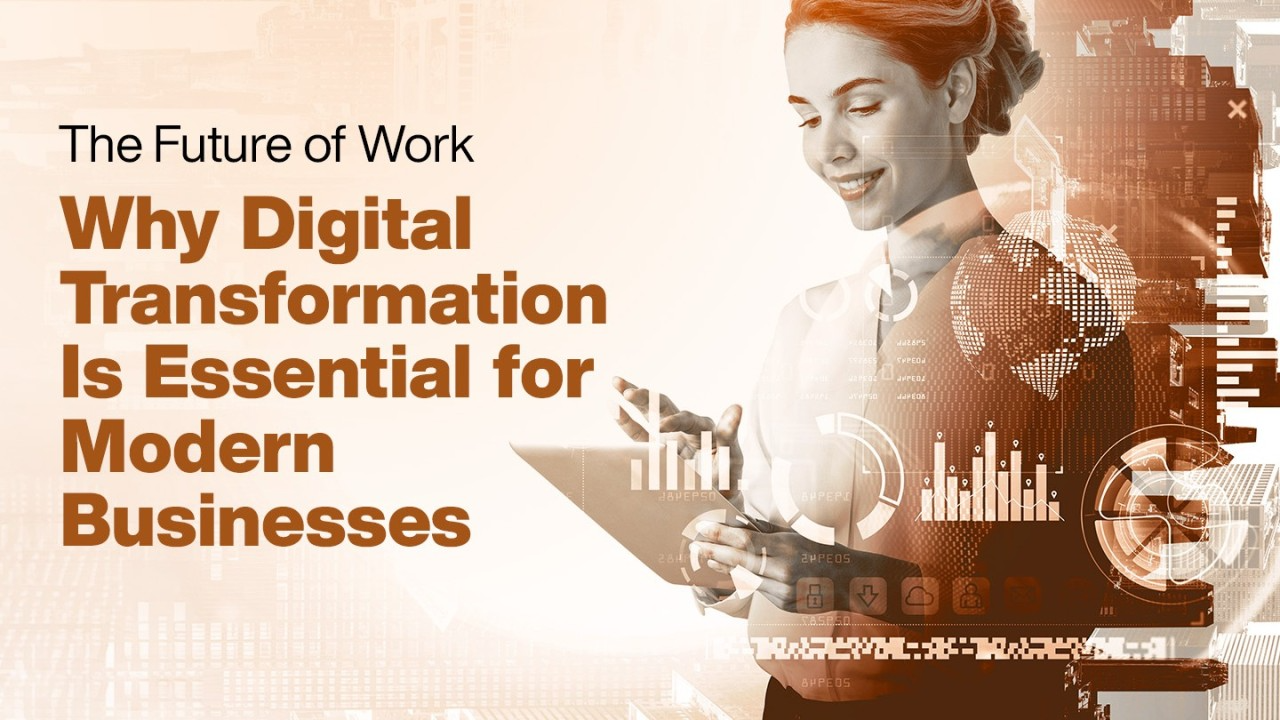
No company can afford to rely on antiquated tools or antiquated systems in the quickly changing digital world of today. The expectations of customers have drastically changed. These days, consumers anticipate prompt service, online accessibility, tailored suggestions, and smooth cross-platform interactions. Companies that fall short of these standards lose clients to more technologically sophisticated rivals. Because of this change, digital transformation is now essential to long-term survival and success rather than merely a choice. In today’s rapidly evolving digital world, no business can afford to rely on outdated tools or traditional systems. Customer expectations have changed dramatically. People now expect quick service, online accessibility, personalized recommendations, and seamless interactions across all platforms. Businesses that cannot meet these expectations lose customers to competitors who are more technologically advanced. This shift has made digital transformation not just an option but a fundamental requirement for long-term survival and success.
Adopting a few new tools or software is only one aspect of digital transformation. It signifies a radical shift in a company’s operations, communication, data management, and value delivery. Automation, cloud computing, artificial intelligence, and data analytics are examples of digital technologies that help businesses optimize their processes and produce faster, smarter, and more effective experiences. In the end, digital transformation aids in a business’s expansion, innovation, and continued relevance in a market that is becoming more and more competitive.
Digital Transformation: What Is It?
Integrating digital technology into every aspect of a business is known as “digital transformation.” Decision-making, customer interactions, and employee work are all altered by this integration. It entails implementing technologies and tools that increase productivity, decrease manual labor, and improve overall performance.
Automating repetitive tasks, deploying cloud-based systems to increase accessibility, utilizing AI-driven chatbots for customer service, enhancing online presence through digital marketing, or using contemporary analytics to make data-driven decisions are a few examples of this. To put it simply, digital transformation enables businesses to function more intelligently, quickly, and accurately than ever before.
Consumers anticipate quicker and more intelligent services.
The sharp increase in customer expectations is one of the most compelling arguments for the necessity of digital transformation. Consumers today favor companies that are quick to react, provide simple online access, offer individualized experiences, and guarantee seamless travel. Customers quickly move to another company if a business is slow, antiquated, or challenging to communicate with.
Businesses are able to provide the kind of experience that consumers now expect thanks to digital solutions like expertly created websites, mobile applications, automated customer support systems, and intelligent communication tools. Increased revenue, stronger brand loyalty, and happy customers are the outcomes of this.
Companies Cut Expenses and Save Time
Conventional business operations frequently entail repetitive manual tasks that waste time and raise the possibility of mistakes. By automating procedures that previously required hours of labor, digital transformation removes many of these difficulties. Data entry, reporting, follow-ups, and payment processing are all much more accurately handled by automated systems.
Businesses save a lot of time and money by not having to hire more employees for repetitive tasks when operations become more automated. By managing tasks more effectively, cloud-based tools and AI systems further reduce operating costs. Consequently, businesses are able to allocate the time and money they have saved to more strategic endeavors like expansion, product development, and customer relations.
Boosts Output and Enhances Performance
Teams can work more quickly and effectively thanks to digital technologies. Project management platforms, communication apps, cloud storage, and CRM systems are examples of tools that keep staff members engaged, connected, and organized. Teamwork becomes seamless, tasks are tracked more efficiently, and information is more easily accessible.
Employees spend more time doing important work and less time looking for files or handling paperwork when everything is digitally stored. Higher productivity, less stress, and more seamless operations throughout the entire company result from this.
Improved Decision-Making Using Information
Businesses that are successful rely on data rather than assumptions. Businesses can gather and examine data from customers, sales, marketing, websites, and operations thanks to digital transformation. Businesses can better understand consumer behavior, market trends, and performance patterns by using this information.
Decision-makers can see more clearly what is effective and what requires improvement thanks to data analysis. It lowers risks, finds lucrative opportunities, and results in more intelligent tactics. Decisions become more precise and efficient when real-time insights are provided by digital tools.
Enhances Communication and Customer Engagement
Businesses’ customer interactions are enhanced by digital transformation. Brands can maintain a constant connection with their audience through websites, social media, email campaigns, online advertising, and mobile applications. Customers are encouraged to interact with the company more frequently as a result of increased visibility.
Customers value transparent, approachable, and well-organized brands, so having a strong online presence also contributes to the development of trust. Long-term relationships are strengthened, and conversions are increased through effective communication.
Encourages Business Scalability
Every company wants to expand, but if systems are antiquated or disorganized, expansion becomes challenging. Because digital tools are designed to manage larger operations without significant difficulties, digital transformation greatly facilitates scaling.
Businesses can manage more clients, enter new markets, and offer more services without losing control thanks to contemporary software. This flexibility lessens the strain on workers and guarantees safe, steady growth.
Gives a Robust Competitive Advantage
Customers have more options than ever before, and competition is fierce in every industry. Businesses that adopt digital transformation immediately benefit from increased productivity, improved customer experiences, and quicker change adaptation.
Digital companies can respond to consumer demands more efficiently, introduce new products more quickly, and keep abreast of emerging trends. In the meantime, companies using outdated systems find it difficult to stay competitive. Because of this, digital transformation is a key differentiator between businesses that advance and those that lag.
Boosts Security and Safeguards Company Information
One of the most important issues facing contemporary businesses is cybersecurity. With the use of cutting-edge technologies like firewalls, encrypted systems, secure cloud storage, and frequent backups, digital transformation helps businesses protect their data. These technologies guard against cyberattacks and unauthorized access to internal data, financial records, and customer information.
In addition to preventing expensive losses that might arise from a security breach, a secure company fosters customer trust.
In conclusion
Regardless of size or sector, digital transformation has become crucial for all contemporary businesses. It enables businesses to function more effectively, satisfy client demands, cut expenses, enhance performance, and make wiser choices. Companies that make digital transformation investments now will be better equipped to handle the opportunities and challenges of the future.
Businesses that adapt will prosper in a world where technology propels advancement, while those that oppose change will find it difficult to endure. Adopting digital transformation is the cornerstone of sustained success, not merely a fad.
Xolvin Team